
by The Mora
Share
by The Mora
Share
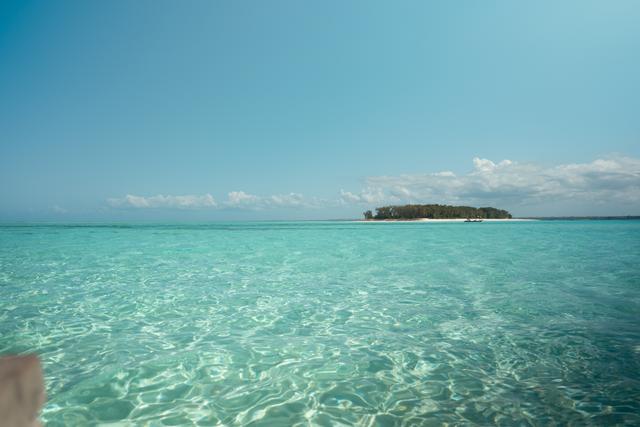
Zanzibar instantly evokes images of postcard beaches and spice-laden breezes. Yet beyond the popular shores exists an archipelago of secrets—beaches where tides dictate life’s rhythm and sand whispers tales of forgotten journeys—awaiting those willing to venture off the beaten path.
These refuges don’t grace travel magazine covers. They require a bit more effort to reach, but reward with a tranquillity that’s become rare in the modern world.
Kwale Island: A Sanctuary of Solitude
This small, uninhabited islet off the Matemwe coast represents the quintessence of tropical isolation. The surrounding waters compose a palette of blues and greens that shifts with the sun’s arc, whilst its encircling reef creates a crystalline lagoon perfect for snorkelling.
Access is exclusively by boat, whether speedboat or traditional dhow. Local operators organise excursions from Matemwe or Nungwi. During low tide, expanses of fine white sand emerge, often completely deserted, offering that sensation of possessing an exclusive landscape for a few hours.
East Coast: Gems Between Paje and Jambiani
Zanzibar’s eastern coast is celebrated for its extensive sandy stretches, but between the popular tourist spots hide sections that retain remarkable authenticity. These beach stretches lack notable tourist infrastructure, meaning purer experiences.
Local villages sit set back from the main coastline, leaving wide expanses to nature. The dominant sound is the murmur of waves and the occasional cry of seabirds. Here, interaction with local life becomes organic: fishermen returning with their catches, women collecting seaweed, genuine smiles.
The dance of tides is particularly pronounced on this coast. During low tide, the beach expands considerably, exposing a fan of marine life and sandbanks that disappear as the water rises. This phenomenon creates changing landscapes ideal for photography and exploration.
Secret Coves of Kizimkazi
Whilst Kizimkazi is known as a departure point for dolphin spotting, its southern extent harbours a quieter allure. The landscape here transforms: the coastline becomes more rugged, interspersed with mangrove forests and bays that go unnoticed by typical visitors.
These coves are accessible primarily by boat or through rudimentary trails. The surrounding waters harbour rich marine biodiversity, thanks to reduced fishing and tourist pressure. Mangroves create unique ecosystems serving as nurseries for fish and crustaceans, adding a fascinating ecological dimension to exploration.
Fumba Island: An Eden of Coastal Peace
Situated in Menai Bay, Fumba Island distinguishes itself through an atmosphere of almost absolute calm. Its extensive white sand beaches frequently remain devoid of crowds. As an ecological sanctuary, the island is protected from large tourist developments, preserving its pristine character.
The predominant focus is ecotourism: small, sustainable lodgings integrated into the natural landscape, activities centred on nature appreciation. The surrounding waters are particularly clear, ideal for snorkelling and diving. Seagrass meadows attract turtles and other herbivores, whilst bay excursions offer opportunities to spot dolphins in a less crowded setting.
Peripheral Sands of Mnemba Atoll
Whilst Mnemba Atoll draws snorkellers and divers to its private reserve, the surrounding waters and small sandbars that emerge at low tide offer their own magic. These peripheral sandbanks are ephemeral, appearing and disappearing with the lunar cycle.
Private boat excursions allow exploration of these zones, creating temporary “beaches” in the middle of the ocean. They’re momentary oases where you feel surrounded by the vast blue, with an entirely different perspective of Zanzibar island on the horizon.
Coastal Trails and Forgotten Coves
Some of Zanzibar’s most hidden beaches lie along coastal trails demanding walks of some duration, or small boats accessing shallow coves surrounded by vegetation. This type of exploration rewards with the sensation of having discovered a truly virgin place.
In these locations, vegetation approaches the coastline, projecting shade onto the sand. The absence of infrastructure means the environment remains as nature conceived it. Intact, diverse seashells are common finds. The quietude converts these spaces into ideal refuges for meditation and reflection.
Preserving for Future Generations
Upon discovering these hidden beaches, an inherent responsibility arises. Leaving the minimum footprint is essential to ensure these places remain intact. Choosing responsible local guides and operators not only benefits communities but helps preserve the fragile ecosystems harbouring these gems.
These concealed beaches aren’t mere destinations; they’re invitations to experience Zanzibar in its most authentic and tranquil form. They’re reminders that true discovery often awaits just beyond the known path, expecting the curious and respectful explorer